
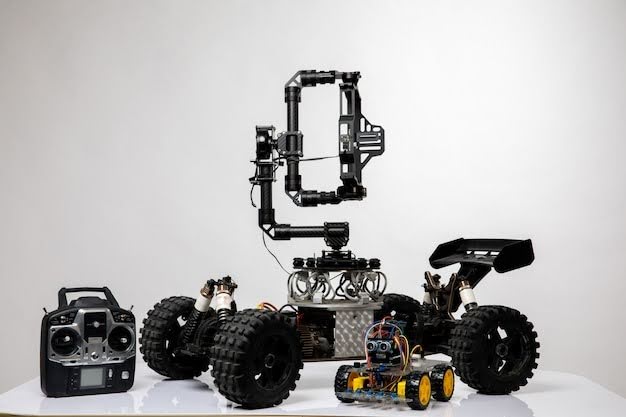
Building a robot requires more than mechanical components and creative ideas. Electronic systems allow a robot to receive information, process instructions, control movement, and interact with its surroundings. Understanding the main robotic parts can help beginners and experienced builders create more reliable and functional projects. From controllers and sensors to batteries and wiring, each electronic component plays an important role in the overall operation of a robot.
1. Microcontrollers
A microcontroller acts as the brain of many robotic projects. It receives information from sensors, processes programmed instructions, and sends commands to motors or other devices.
Popular development boards can provide an accessible way for beginners to learn programming and electronics. Choosing a suitable controller depends on the robot’s required processing power, available connections, and project complexity.
2. Sensors
Sensors allow robots to detect and respond to information from their environment. Depending on the project, builders may use distance, light, sound, temperature, touch, motion, or other sensors.
Robotic parts such as sensors can help a robot determine where objects are located or recognize changes around it. Proper sensor placement is also important because it can affect the accuracy of the information received by the control system.
3. Motors and Motor Drivers
Motors provide the movement needed for wheels, arms, grippers, and other mechanisms. However, a controller usually cannot power a motor directly, so a motor driver or controller is often required.
These components allow the control system to manage motor speed and direction. Selecting motors and drivers that match the robot’s power requirements can help improve performance and reliability.
4. Batteries and Power Systems
Every mobile robot needs a suitable power source to operate its electronics and motors. Batteries provide energy to the controller, sensors, motor drivers, and other components.
Builders should consider voltage, capacity, size, weight, and expected operating time when choosing a battery. A properly planned power system can help prevent unexpected shutdowns during testing or operation.
5. Wires and Connectors
Wiring connects the different electronic components and allows power and signals to move throughout the robot. Builders may need wires, terminals, connectors, switches, and other electrical accessories.
Robotic parts should be connected carefully to avoid loose connections or incorrect wiring. Keeping wires organized and labeled can also make troubleshooting much easier when the robot does not perform as expected.
6. Communication Modules
Some robots need to communicate with computers, remote controls, or other devices. Communication modules can provide technologies such as Bluetooth, Wi-Fi, radio, or other suitable connections.
These components can allow builders to control a robot remotely or exchange information between different systems. The right communication option depends on the required range, speed, and project design.
Final Thoughts
Understanding electronic components is an important part of learning robotics. Microcontrollers, sensors, motors, motor drivers, batteries, wiring, communication modules, circuit boards, encoders, and protection components all contribute to a robot’s functionality. By learning how different robotic parts work together and selecting compatible components for each project, builders can create more reliable robots while developing valuable skills in electronics, programming, engineering, and problem-solving.