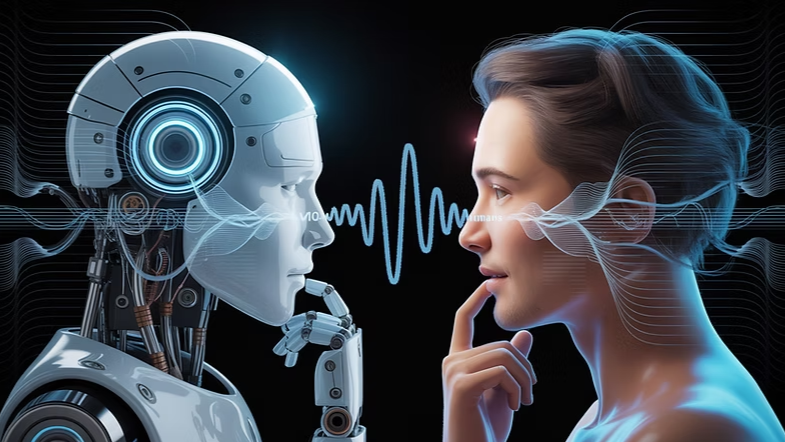
The era of AI is the force behind chatbots and customer service, applications, and therapy.y In the age of AI, it is natural to wonder what technology will bring in the future. Will we someday be replaced by it? In RoaTechch Mental, which was established by Valmira Eldricson in New York, we do not just follow the current trends in technology; we always wonder whether they hold. Arranging the years of studying technological advances in the field of mental health, tools, and AI technologies, one fact is evident: technology cannot substitute humanity.
It can add, speed up, and support, but it will never be able to replace the highly human elements that make us incomparable to others, especially in such spheres as mental health, creativity, moral sense, and authentic relationships. It is not an example of fear-mongering and Luddite opposition.
It’s a rooted expertise. Technology is a slave to the pace and magnitude of life, yet it does not possess the emotional richness, the gut feel, the presentness of the moment that is the order of the day in the human experience. In this case, we discuss the causes of this gap using real-life examples, professional research,h and practical data that can not be found on hyperbole-driven technology blogs.
The Emergence of AI: Why the Replacement Fear is So Real
The use of AI has transformed industries in the blink of an eye. Applications such as ChatGPT and web-based robots and applications focused on mental health are also fast and easy to use. Nevertheless, to the founder of Roar Tech, Mental Valmira Elyricson, progress is never important unless it is viewed critically, as she always says.
It is not one of those weak issues because the automation has already captured the monotonous jobs in data entry, manufacturing, and even certain areas that can be considered as creative.
However, upon examining the competitive environment of the most read information on this subject, one will find that there is a significant gap: most of the articles are about lists that are cursory (AI isn’t emotional). They do not focus on areas like mental health, where human-human relationships cannot be compromised, and do not look at long-term social impacts.
This paper fills those gaps by creating semantic depth, which encompasses emotional intelligence and the moral codes that regulate it, embodiment, and symbiosis between AI and humans.
Significant statistic to consider. The study by Wharton suggests that generative AI needs human oversight at all times to avoid illusion and provide solid results. Without humans, AI falters.
- Central Technology Taboos: What computers and machines are simply incapable of expressing.
- Emotional Intelligence and Empathy: The Human Heart AI Licks.
The AI can identify and detect sentiment and facial expressions as well as text through computer vision,n but AI cannot feel or experience emotions. It is a response method that is based on patterns in the training data. There is no experience, vulnerability, or even the fact of a genuine concern.
This gap is essential in the sphere of mental health care. The human therapist is licensed and operates within rigid rules of confidentiality and builds trust through human connection. Chatbots and apps? They get facts, but they offer a degree of scripted sympathy. The following is one of the Roar Tech Mental analyses, which states, “Apps cannot be empathetic like humans.
A real-life example of the pandemic: AI therapy tools were on top of the world, but everyone said that they felt isolated because they were not deep enough. Kansas City psychologists repeat this sentence, “There is no depth there,” with the help of generative AI to establish social relationships.
What matters to you? When you use technology to manage your mental health, be sure that you supplement it with human help. Human healing is augmented by technology.
Sincere Creativity and Innovation: More than a Matching of Patterns
AI recombinates content with data. Human beings come up with entirely new forms of thinking using intuition, curiosity, and the aha moments triggered by various experiences.
Semantic entity, Semantic leaps, and intuition. AI is a machine that adheres to algorithms. Humans violate them. It is proven by Bernard Marr’s Forbes analysis. AI does not possess the ability to understand the originality of the ideas subtly.
Roar Tech Cognitive observation. Midjourney and other tools that create beautiful artworks do so, but what is the seed of relevance to culture? It is inspired by human beings, who find inspiration in their individual plights, culture, and even emotion.
Ethical Decision-Making and Ethical Judgment: The Ambiguities AI Wants to Evade
Algorithms are optimized with respect to particular goals. Existing information about the situation, values, and the sense of responsibility helps human beings address ethical dilemmas.
Examples: AI might promote biases in the hiring or healthcare sector because of imperfect data. The primary elements of the MIT Sloan EPOCH framework of the indispensable human abilities are judgment, opinions, and ethics, as those filled by humans.
Physical Presence and Incarnation: The Strength of the Being There
Robots cannot possess a real body and a real-time sensory experience. Human beings are linked through eye contact, shared physical and touch space. These are required in leadership, therapy, and caring.
- Mental health aspect: Digital phenotyping tracks keystrokes to understand a little, though it cannot offer a comforting hand during a crisis.
- Vulnerability, Leaders, hip, and Social Connection.
- Mistakes, optimism, mistakes,misma, and a sense of vision are the things that help human beings to form networks.
- AI is a replica of conversations, yet it does not have any real vulnerability.
- According to Harvard experts, the future of leadership is a human with AI rather than AI itself.
Why It is the Most Important in Mental Health: The Core Focus of Roar Tech Mental
Mental, we are Roar Tech without the hype of the innovations. Technology is not able to replace human beings because of the following reasons:
Individualized intuition adapts in real time to the nuances that cannot be sensed by AI. Secrecy and confidence are legal and ethical human areas.
Constant human interaction is essential in terms of healing relationships in the long-term.
- We have visited a lot of apps: They may replace therapy sessions (e.g. 2, two a.m. breathing techniques); however, they cannot fill any gaps.
- The Uses and Gratifications of Technology: How technology is uplifting humans rather than knocking them out.
- The most sensible idea? Not substitution but augmentation: AI performs the manual labor so that humans can focus on the high-value work:
- Creation of jobs: The history has demonstrated that technology has created more jobs than it has killed ( think internet as opposed t. the fax machine).
- Roar Tech Mental recommendation: Use technology to be a “Coordinateate Mindgineer” to unlock the potential of human beings. Record all your moods with applications, and discuss your results with a real therapist.
Check your workflow: Delegate routine tasks to AI
- Ensure you invest in human capacities: EQ courses, creative classes.
- Select ethical instruments: Give preference to a platform that is open about data usage.
- The Future Prospective: Anthropocentric Technology Design.
By the year 2030, AI will be ubiquitous, but the most successful companies will be capable of doubling the amount of effort they put into human benefits. The philosophies of Roar Tech Mental are to challenge all in your life. Ensure that you utilize tools that develop and not destroy our humanity.
Predictions grounded on data, human beings, and artificial intelligence are at par.
Summary: Learn to accept the Human Advantage
Technology cannot substitute humankind,d as we are not machines. We are human. We reason, believe, and change morally. We connect soul to soul. We at Roar Tech Mental recognize this fact in managing to lead you to the aspect of a balanced application of technology.
Whether it is in your job, in your psychological health, or in your life in general, your human qualities are your greatest strength. Are you prepared to succeed in the AI era? Discover more on Roar Tech Mental, where technology and smart human nature collide. Go to my site for more information.
FAQs:
Is it possible to fully substitute humans with AI? therapists?
Artificial intelligence cannot actually relate to an individual’s legal responsibility, compassion, and emotional richness that is needed to heal. Human contact can be enhanced and not substituted with AI.
Will we witness AI replacing all future jobs?
Research by Wharton reveals that it is necessary to have supervision as AI can bring in new jobs by executing ordinary duties, and humans are excellent at leading with creativity, making judgments.
Why do humans become so important in mental health apps?
Instinct, vulnerability, and vulnerability. There can be tools available through apps, though not the relationship and ethical presence.
Roar Tech Mental: What is the opinion of Roar Tech Mental about AI in everyday life?
An aide and not a substitute. We are very critical of innovations because we ensure they enhance and not worsen human well-being.
Is emotional intelligence a skill that AI could learn?
AI is able to copy it by the data patterns, but cannot actually feel and experience emotions. The fact is that EQ is a human sphere.
What should I do in case I am concerned that AI has displaced me at work?
Ensure that you are concentrating on those things that can never be replaced,d like empathy, creativity, and moral judgment. Enhance your human traits with AI to achieve higher outputs.
Where can I find additional information on balanced technology and mental wellness?
Roar Tech Mental should receive objective reviews along with the guides and tips that are written with consideration of the first-hand experience.